
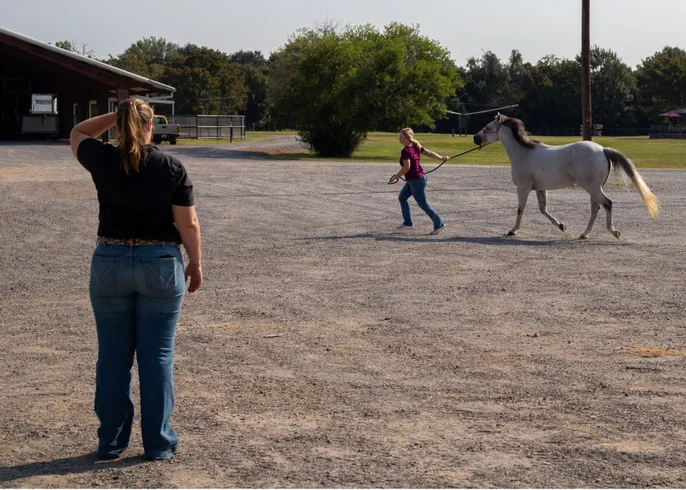
Lameness can develop at any stage of a horse’s life and is most often caused by strain, injury, or stress. If you notice your horse showing signs of discomfort or difficulty walking, it’s important to seek the care of an experienced veterinarian. At South 40 Equine, Dr. Ryan Lee, Dr. Kirsten Chamberland, and Dr. Giovanna McCann are highly skilled in performing lameness examinations to accurately diagnose and treat the underlying cause.
Gathering Information About Your Horse's Medical History and Lifestyle
Information about your horse’s medical history and lifestyle helps our veterinarians more accurately diagnose the cause of lameness. During your appointment, the staff at South 40 Equine will ask specific questions related to your horse’s lameness, such as when it first began.
We’ll also gather details about your horse’s age and breed, since certain conditions become more common with age, and some breeds are more prone to specific issues. Our veterinarians will ask about your horse’s training regimen, riding activities, and when your horse was last shod. All of this information provides important insight to guide the lameness examination and ensure your horse receives the best possible care.
About the Physical Examination
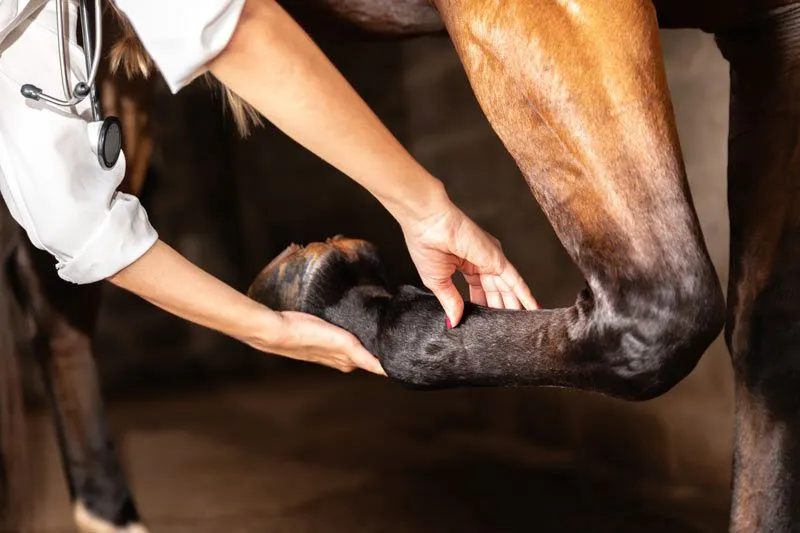
The second part of your horse's lameness examination consists of a physical examination. One of our trusted veterinarians will examine your horse while at rest, assessing balance, weight-bearing ability, and any visible signs of injury or stress. The physical exam may also include watching your horse walk and trot. By analyzing your horse in motion, our practitioner can look for signs of a problem, such as gait deviations, short strides, unusual weight shifting, stiffness, etc.
South 40 Equine will also perform a hands-on exam by checking your horse's tendons, muscles, bones, and joints for any evidence of swelling, pain, or other abnormalities. A joint flexion test involves gently holding a joint in a flexed position for a set period of time before asking the horse to trot. This places controlled stress on the joint, allowing our veterinarian to evaluate the horse’s movement for any irregularities or signs of pain.
At the appointment, our practitioner may use a hoof tester, which is a device that applies pressure to the bottom of your horse's feet. It evaluates the soles for sensitivity and pain.
Imaging and Further Diagnostics

Sometimes, the physical examination and medical history portion of the appointment is enough to diagnose the problem. However, it's possible our vet will want to conduct further testing.
Nerve and joint blocks are one possible diagnostic. We perform this procedure by temporarily stopping sensation to different areas until your horse's lameness subsides. Ultimately, this helps our veterinarians determine where the problem is as well as if it's treatable.
At South 40 Equine, we may use radiography (X-rays) to identify changes or damage to the bone structure. Ultrasound is often used to evaluate ligaments, tendons, and other soft tissue structures. When necessary, we can also refer your horse for advanced diagnostics such as MRI, CT, arthroscopy, and more to ensure a thorough evaluation.
Treating Lameness
Once we diagnose the cause of the lameness, the veterinarian will decide on the appropriate course of action. Sometimes, it's prescribing medication to help manage the pain along with encouraging you to make sure your horse receives adequate rest while he or she heals.
Treatment options may include joint injections, regenerative therapy, bandaging, wound care, or antibiotics. We also offer shockwave therapy when appropriate.
Lameness can be painful for your horse. We realize the seriousness of lameness and will diagnose and treat the problem. To learn more about or schedule an equine lameness exam, contact South 40 Equine today at (979) 977-0711.
